
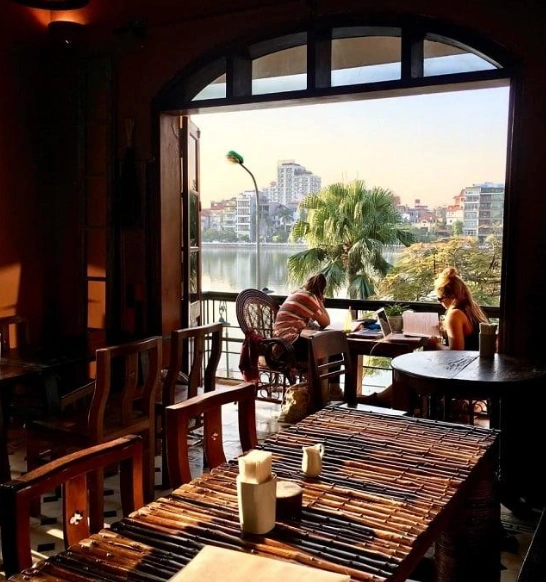
Remote work in Hanoi lives or dies on the room you choose. The city is full of good hotels, but most of them are built for tourism, not for someone who needs a fast connection, a real desk and quiet for a morning of calls. Getting the accommodation right is the difference between a productive month and a frustrating one.
This guide covers the areas worth considering, the types of accommodation that work, and the specific things to check before you book.
Start With the Area
Where you stay shapes your working day more than the room does, because it decides what is within walking distance and how much noise reaches the window.
Tay Ho and West Lake
Tay Ho, around West Lake, is the most common choice for remote workers. It is quieter than the center, it has a large expat community, and it has a high concentration of cafes and serviced apartments. The lakeside road is good for a morning walk, and there is enough of a food scene that you never need to cross the city for dinner.
The trade-off is distance. You are a taxi or a long walk from the Old Quarter, so if your plan is to spend most days sightseeing, this is less convenient. If your plan is to work most days and explore on weekends, it is hard to beat.
The Old Quarter
The Old Quarter puts you in the middle of everything: food, coffee, markets and transport. For a short stay, or for someone who works flexible hours and wants to be in the middle of the action, it is the obvious choice.
The problem is noise. The streets are busy from early morning to late at night, and a street-facing room can be genuinely hard to work in. If you choose the Old Quarter, ask for a room at the back of the building, away from the road, and be prepared for smaller rooms at lower prices.
Ba Dinh and the French Quarter
Ba Dinh and the area around the French Quarter are quieter, greener and more residential, with wide streets, embassies and a calmer pace. They suit longer stays and anyone who values sleep over nightlife. Cafes are fewer than in Tay Ho, but the ones that exist tend to be calm and good for work.
Which Type of Accommodation Works
Serviced apartments
Serviced apartments are usually the best fit for remote work. They tend to have faster and more stable internet than hotels, a real desk, a kitchen and, most importantly, the option of a monthly rate. Staying a month in an apartment often costs less per night than a week in a hotel, and it feels less like a hotel and more like a place to live.

The Tay Ho apartments guide covers what to look for in more detail. The main caveat is that quality varies, so inspect the room and test the internet before you commit to a long booking.
Boutique hotels
Boutique hotels offer more comfort and better service than most apartments, with design, a proper breakfast and a front desk that can help with logistics. They work well for stays of a week or two, especially if you only need to work a few hours a day.
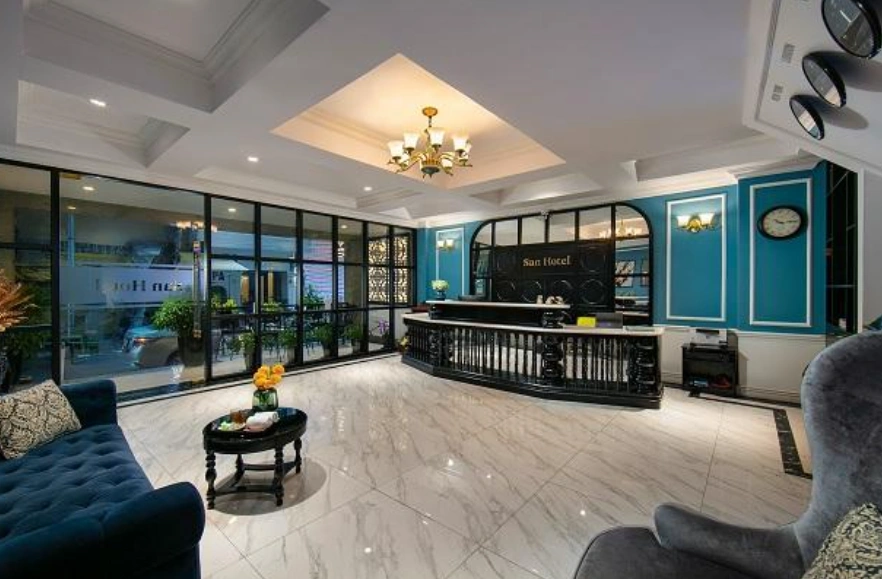
What they often lack is desk space and a guarantee of quiet. A beautiful room can still face a busy street.
Business hotels
Business hotels compete on reliability: fast internet, workable desks, quiet floors and consistent service. They are the safest bet for someone whose income depends on calls that cannot drop. The cost is higher, and the atmosphere is less interesting, but for a working week they are hard to fault.
A Monthly Cost Picture
The difference between a hotel and an apartment is mostly a matter of length of stay, and the numbers make the choice clearer than any list of features.
A boutique or business hotel charges by the night, and the nightly rate does not fall much even when you stay for weeks. For a two-week trip, that is fine, and the service, breakfast and front desk are worth paying for. For a month or more, the same nightly rate adds up fast, and the value falls away.
Serviced apartments are priced differently. Many quote a monthly figure that works out well below the nightly equivalent, and they include a kitchen, which cuts your food costs and gives you the option of eating in rather than out. Over a month, the combination of a lower rate and cheaper meals can change the shape of your budget, not just your accommodation.
The catch is flexibility and quality. Apartments vary more than hotels, and a bad month in the wrong apartment is a long time to be stuck. That is why it is worth booking a short initial stay, testing the room and the internet in person, and only then committing to the longer term. A hotel is the safer choice for a short trip; for a month of real work, an apartment you have seen with your own eyes nearly always wins on both cost and comfort.
What to Check Before You Book
The details that matter are rarely in the listing photos. Ask these questions directly:
- What is the actual internet speed in the room, not the lobby?
- Is the room at the front or the back of the building?
- Is there a desk and a chair with a back, or just a bed and a stool?
- Is there air conditioning in the room, and does it work quietly?
- Is there a window, and does it open?
Internet, Backup and Calls
Hanoi's internet is generally fast, but hotel wifi can degrade in the evening when everyone is streaming. Test it in the room at the time of day you plan to work, and keep a local data sim as a backup. Tethering from a phone is often faster than a shared network, and it costs very little.
For calls, the room matters as much as the connection. A tiled bathroom is not a soundproof booth, and street noise will reach any microphone. If you take a lot of calls, either book a quieter area or plan to use a dedicated space. The coworking guide covers the options for a proper work base outside your room.
Longer Stays and Monthly Rates
If you are staying more than two weeks, ask for a monthly rate and a room with a stable connection. Long-stay discounts are common, and they can bring the price down substantially compared with nightly booking. Ask in person or by message rather than through a booking platform, because the best rates are often negotiated directly.
For a stay of a month or more, consider booking a short initial stay and then looking at rooms in person. Photos hide noise, and the only reliable way to judge a room is to stand in it.
Practical Notes
The guide to how many days you need in Hanoi is useful for deciding whether you are staying long enough to justify an apartment. If you are here for a week, a hotel is simpler. If you are here for a month, an apartment usually wins.
Finally, think about your working hours. Hanoi is seven hours ahead of Western Europe and twelve ahead of the United States east coast, so a normal working day may overlap with a very early or very late window at home. Choose a room where you can take a call at six in the morning without waking the whole building, and you will have solved the hardest part of the setup before you arrive.