Winter Weather Tips for Travel Nurses
I recently had to learn a lot about surviving winter in a snowy place. I know a lot of us southern travel nurses have questions when considering winter contracts. My hope is that this post will give you some actionable tips so you can face your next winter safely and with confidence.
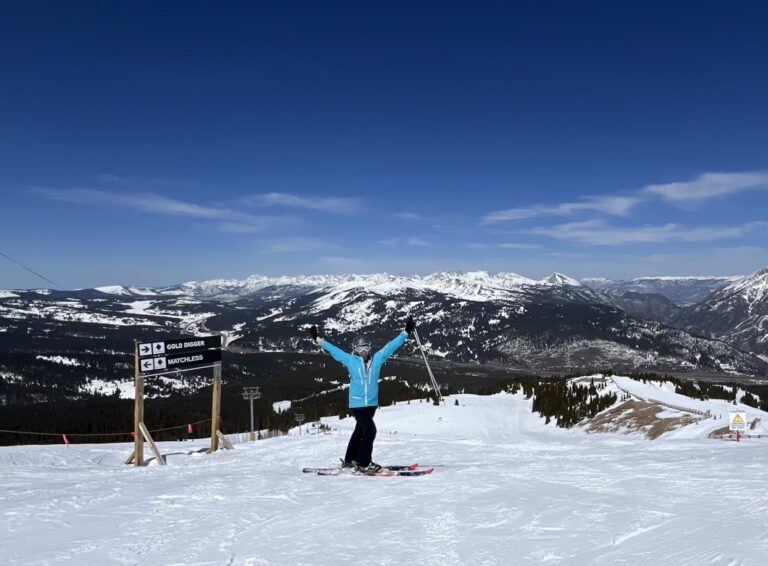
My first wintery travel nursing contract was in Colorado. Realistically, most of Colorado doesn’t get that cold. I did, however, spend a lot of time at colder, higher elevations learning to ski (which I highly recommend!). Of course, this also involved a lot of driving through snow covered mountains, so learning to drive in snow was essential.

Driving in Snowy Conditions
Learning to drive in the snow was my biggest fear when I moved to Colorado in December. I soon realized, however, that it’s really not that bad. All you need is a few tips and the right equipment.
Tips for Driving in Snow
- Anticipate needing longer to stop.
- This is especially true if conditions get icy. Your vehicle will have less grip, so give yourself longer to stop. This also involves leaving more space than you normally would between yourself and the vehicle in front of you.
- Brake slowly.
- Never slam on the brakes when driving on snow or ice. Focus on a steady, gentle slow down.
- Turn slowly.
- Just like with braking, you’ll need to slow down when you turn so that your vehicle can maintain traction.
- Use extra caution when traveling over bridges.
- Bridges will freeze easier than the roads due to the cold air underneath. Expect a higher probability of ice and less traction.
- Know how to correct fishtailing.
- One of the scariest parts of driving on ice is fishtailing- when the rear of your vehicle loses traction and slides to one side or the other.
- If you follow the tips above, you are much less likely to encounter this problem.
- Turn into the slide (turn your wheels in the direction that the rear of your vehicle is sliding). Your vehicle might start fishtailing to the other side. It’s not uncommon for this to happen, just anticipated it and do the same thing on the other side. Your turn into the slide should be proportional to how much your tail is sliding.
- Don’t panic or overcorrect. If you panic and jerk your wheel in an attempt you correct, you risk sending the vehicle into a full on spin. Remember- steady and controlled.
- Don’t brake. Avoid the impulse to brake as this could further reduce your chance of regaining traction. In fact, sudden braking is one of the most common causes of fishtailing.
- Be aware of chain or traction laws.
- Some areas have restrictions on what vehicles can operate on certain roads or highways and which vehicles need tractions devices such as snow chains or socks. Know the rules for where you will be driving.
Equipment and Vehicle Preparation
In addition to knowing how to drive in the snow, you also need to know how to prepare your vehicle for winter weather.
- Tires
- Make sure your tires have ample tread.
- All weather tires are significantly better than summer tires, and winter tires are a step beyond that.
- Carry snow chains or snow socks with you. Practice putting them on before you go. Be aware that some areas may require them as mentioned in the section above.
- Vehicles with all wheel drive or 4-wheel drive are less likely to get stuck, but chains or socks can help if your vehicle is 2 wheel drive only.
- Emergency kit
- You’ll want the following items in your emergency kit:
- an ice scraper
- warm clothes or a blanket (in case you get stranded)
- non-clumping kitty litter, and a small shovel (in case you get stuck)
- You’ll want the following items in your emergency kit:
- Gas
- Keep your gas tank at least 1/4 full (1/2 + is better). In sub-zero temperatures, condensation in your gas tank can freeze and lead to engine trouble.
- Coolant and wiper fluid
- Make sure your coolant and wiper fluid are rated for the temperatures you’ll be driving in. I learned my lesson the hard way when I had my wiper fluid freeze on the way to a day of skiing.
- Clear the snow/ice before you drive.
- If you have to park your vehicle outside, you may find a big pile of snow on your vehicle’s roof. Be sure to brush this off before you drive so you don’t endanger vehicles behind you.
- Anticipate needing some extra time to scrape the ice off your windshield and defrost.

What to Wear
The most important tip I learned about dressing for cold weather: how to layer correctly. I found a 3 layer system to be most effective:
Base Layer
The primary goal of your base layer is to keep you dry. The fabric should be moisture wicking- synthetic fabrics like polyester or natural wool fabrics work well. This layer needs to touch your skin, so go for a comfortably snug fit.
Mid Layer
The middle layer is your insulating layer. The one that actually keeps you warm. This would be your fleece, sweater, down jacket, etc. Of course, you’ll want to adjust depending on how cold it will be.
Outer Layer
The outer layer is designed to protect you from wind and water. If you are doing outside sports, it’s especially important that you have a weatherproof outer layer. Also, note that some heavy jackets combine both a middle layer and outer layer in one.
Head, Hands and Feet
Lastly, accessories such a a beanie, gloves, a scarf and wool socks can go a long way in keeping you warm – without adding extra bulk. Oh, and mitten gloves are warmer than gloves with individual fingers.
More Winter Weather Tips
- Consider getting spikes for your shoes. You can find these traction devices fairly inexpensively on amazon (search crampons, ice cleats or yaktrax). They will help keep you from slipping on ice. I used mind primarily for hiking, but you might need them just for walking around outside depending on your climate.
- Check out second-hand stores or discount stores like Sierra Trading Post to save on costs for things like coats. It can definitely add up when you don’t already have most of this in your wardrobe.
- For winter sports equipment, look into season-long rentals or used items. I was able to rent my skis, boots and poles for the entire season for a fraction of what it would have cost me to rent each time or to buy new.
I hope you find these winter weather tips helpful for your next travel nursing contract! In the end, I say don’t let winter weather scare you. It’s totally doable, and worth it to explore all the fun that snowy weather brings.


Julie (Juls for short) is the founder of travelingwithjuls.com. She is a registered nurse turned travel nurse. She loves adventure and learning about new places. Her goals are to help other nurses learn about travel nursing, and to share information about the locations/destinations she lives in for 3+ months at a time.